Julian Cabezas, LCSW - Trauma & Relationship Therapist in Brooklyn

About Me

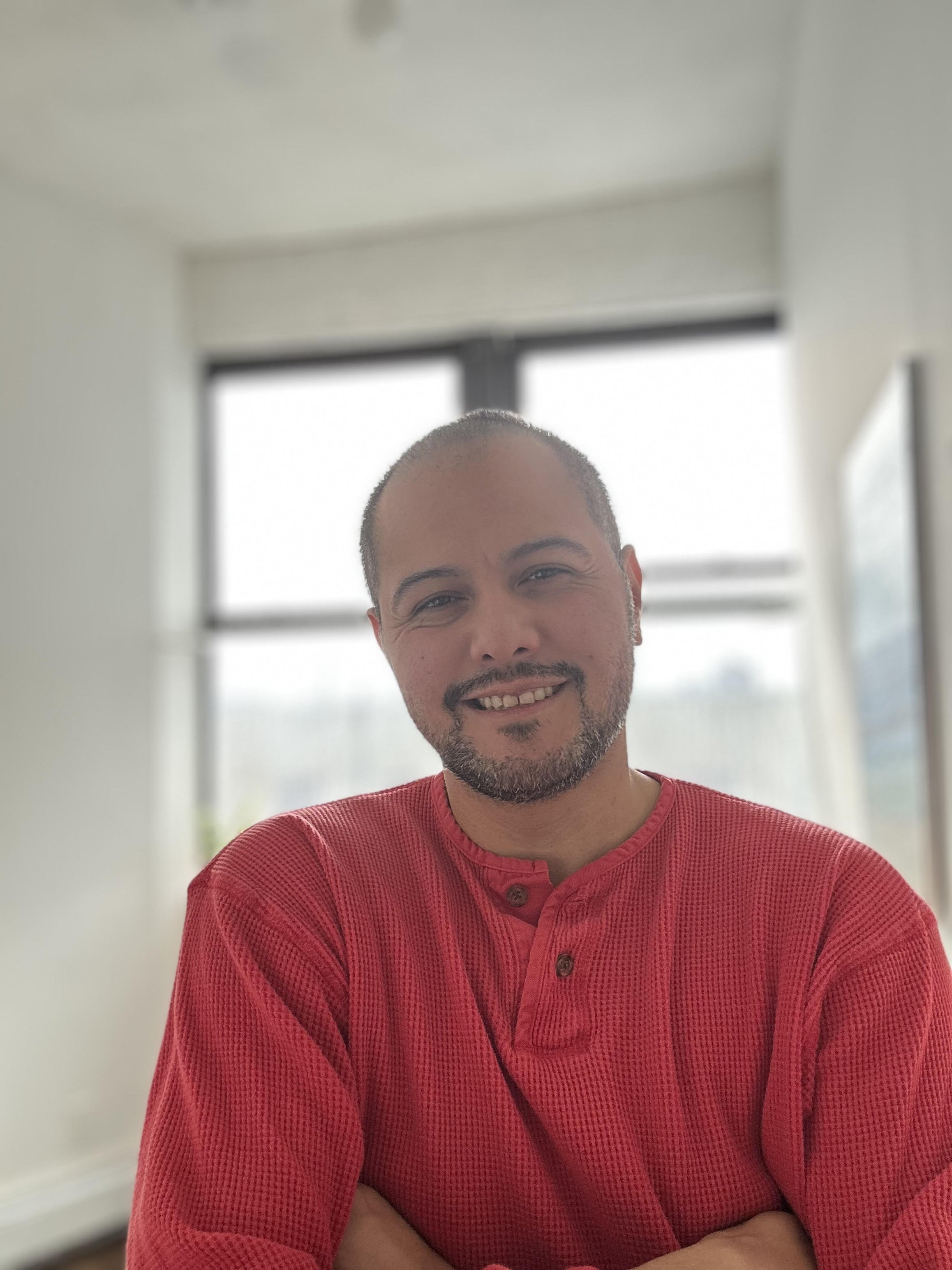
Hi, my name is Julian Cabezas, LCSW (he/him). You'll be sharing more about yourself, so let me give you a little background on me.

My Approach to Trauma & Internal Family Systems (IFS) Therapy

We carry agreements with ourselves—about who we are, what we deserve, how we should be. Many of these agreements weren't ours to begin with. They came from moments when life overwhelmed us, from voices that told us we weren't enough, from systems that asked us to shrink. My work is about helping you see these agreements clearly, question the ones that no longer serve you, and reclaim your authentic truth.

Trauma—whether it's the "Big T" experiences that shake our foundation or the "little t" moments that accumulate over time—creates these limiting beliefs. It shapes how we see ourselves, relate to others, and move through the world. Together, we create a warm, collaborative space to explore what's happening beneath the surface and work to untangle the patterns that keep you from your freedom.

In my practice, I notice three paths people walk: those who don't know what to do and need practical guidance; those who know the tools but can't integrate them into their lives; and those navigating both territories at once. Wherever you are, we meet you there.

I don't pathologize people. Witnessing my elders work with susto alongside my training in psychotherapy taught me there isn't one right way to heal. We all develop strategies to survive what we've been through. I work from deep compassion for families—understanding that everyone is doing the best they can with the tools and circumstances they have. As both a husband and parent, I know what it takes to show up for the people we love while doing our own work.

I'm direct and genuine because real change requires us to get to the root of what's happening. Your protective strategies deserve respect. Your pace matters. This is a partnership, and you are the expert on your own experience.

Who I Work With: Specializations & Populations

I work with individuals, couples, families, and teenagers navigating:

Trauma & PTSD Treatment

LGBTQ+ Individuals, Couples & Families

Relationship Therapy (Polyamorous, Monogamous & All Structures)

Immigration & Identity Exploration

Perinatal & Postpartum Mental Health

Teen & Adolescent Support

I have extensive experience with BIPOC and Latine-identified communities. I’ve worked on cultural competency trainings for LGBTQ+ individuals, couples, and families, as well as people navigating unique or complex issues, including queer and polyamorous relationships, male chastity/kink exploration, and gender-affirming care.

I also support parents doing their healing work while raising children, and teens finding their way through challenging circumstances.

Training & Therapeutic Modalities

My therapeutic foundation is in Internal Family Systems (IFS), and I've completed extensive training including IFS Level 1, QTIFS (Queer & Trans IFS), IFS with Neurodivergent Clients, IFS for Children and Adolescents, Appreciating Extreme Parts in Context: IFS, Food, and the Body, and Intimacy from the Inside Out (IFIO). I'm also trained in:

Brainspotting Phases 1 & 2 | Somatic EMDR | Emotionally Focused Therapy (EFT) | Gottman Method Couples Therapy Levels 1 & 2 | Relational Life Therapy Levels 1 & 2 | Imago Relationship Therapy Level 1 | Somatic Experiencing® Levels 1 & 2 | The Collaborative Assessment and Management of Suicidality (CAMS) | Foundations in Somatic Abolitionism with Resmaa Menakem | Sex Therapy (Institute of Sexual Education and Enlightenment) | Ketamine Assisted Psychotherapy Training (Fluence) | Advanced Perinatal Mental Health Psychotherapy (Postpartum International) | Comprehensive Childbirth Prep & Lactation + Newborn Care with Manhattan Birth | CBT Essentials with the Beck Institute | Level One American Sign Language with Jeremy Lee Stone

I've served as a practicum instructor for graduate students at Northwestern University, Columbia University, Hunter College, and NYU, supporting emerging therapists in developing their clinical identity.

Before becoming a therapist, I spent years in community health and advocacy—providing HIV testing and counseling, expanding access to PrEP, ARVs, and gender-affirming care, serving with the New York State HIV Advisory Body, intensive home based case management for people living with co-morbities, completing two years with AmeriCorps mentoring students in Los Angeles while running day long intensive trainings for over 200+ corps members aged 18-24, and working as a Peer Health Educator on food access and sexual education in the California State University system. This foundation taught me that healing isn't just personal—it's also about the systems and communities we're part of.

I'm currently accepting clients for my waitlist, with openings starting February 2026. I look forward to connecting with you.

Frequently Asked Questions About Therapy

What is Internal Family Systems (IFS) therapy?

1

Internal Family Systems is an evidence-based approach that helps you understand different aspects of yourself - what we call "parts." Instead of trying to eliminate protective behaviors or feelings, IFS helps you develop compassion for why these parts exist and what they're trying to protect. It's particularly effective for trauma, relationship patterns, and understanding inherited family dynamics.


Do you offer therapy for polyamorous relationships?

2

Yes, I work with polyamorous, monogamous, and all relationship structures. My training in Gottman Method, Emotionally Focused Therapy, and Relational Life Therapy applies to any committed relationship configuration. I understand that ethical non-monogamy has unique dynamics around communication, boundaries, jealousy, and time management.


What does trauma-informed therapy mean in your practice?

3

Trauma-informed means I recognize that what looks like resistance or difficulty is often a protective response that made sense at some point. I don't pathologize your survival strategies. We work at your pace, honor your nervous system's needs, and understand that healing isn't linear. My training in Brainspotting, EMDR, Somatic Experiencing, and IFS specifically addresses how trauma lives in the body and nervous system.


Are you accepting new clients?

4

I'm currently accepting clients for my waitlist, with openings starting February 2026. Contact me to discuss your needs and timeline.

Frequently Asked Questions About Therapy

What's the difference between IFS, EMDR, and Brainspotting?

5

While all three are effective trauma treatments, they work differently. IFS focuses on understanding and working with different parts of yourself through dialogue. EMDR uses bilateral stimulation (eye movements) to process traumatic memories. Brainspotting uses fixed eye positions to access deeper brain processing. I often integrate these approaches based on what your system needs at any given time.


What should I expect in our first session?

6

Our first session focuses on understanding what brings you to therapy, what you're hoping for, and whether we're a good fit. We'll discuss your history, current challenges, and I'll explain how my approach might help. There's no pressure - this is a mutual assessment to see if we can work well together.